The occupation of Japan was a paradoxical time where a foreign military was essentially forcing “freedom” onto a brutally oppressed society of Japan. While the old guard—the brutal dictatorship and ultra-extremists—felt a sense of profound shame, there was a significant segment of the Japanese population that viewed the arrival of the Americans as a “Liberation from the bloody dictatorship.”
In this article I refer to the specific groups and individuals in the pro-democracy camp who were delighted and energized by the unconditional surrender of the brutal dictator king Hirohito:
The “Old Liberal Democrats” and Diplomats
Before the military dictatorship took total control in the 1930s, Japan had a period known as Taisho Democracy. Many politicians from that era had been silenced, killed, imprisoned, tortured, or forced into retirement.
Shigeru Yoshida: A career diplomat who had been arrested by the military police (Kempeitai) for trying to negotiate peace with the United States earlier in the war. He became the leading pro-Western figure and served as Prime Minister. To him, surrender was the only way to save the essence of Japan from total annihilation.
Tanzan Ishibashi: A journalist and economist who had consistently argued against the mad imperialist King. He saw the surrender as the “second opening of Japan” (comparing it to the Meiji Restoration).
The Intellectuals and Educators
University professors and writers who had been forced to teach state-sponsored “Emperor-worship” propaganda were among the most relieved.
They formed the “Culture State” (Bunka Kokka) movement. Their argument was that Japan had failed as a “Military Dictatorship State” and must now reinvent itself as a “State of Culture and Science.”
They welcomed the US-led Fundamental Law of Education (1947), which replaced brainwashing and indoctrination with critical thinking and individual rights and civil liberties.
Women and Suffragists
Perhaps no group “won” more from the surrender than Japanese women.
Ichikawa Fusae: A legendary suffragist and women’s rights activist who had fought for the vote since the 1920s.
Under the military dictatorship, women were expected to be “Good Wives and Wise Mothers” whose only job was to produce child-soldiers.
The Result: Only weeks after the occupation and surrender, the US occupation pushed for women’s suffrage. In April 1946, Japanese women voted for the first time in history, and 39 women were elected to the Diet (Parliament). This was a victory they could not have achieved for decades without the “reset” of 1945.
Labor Unions and the Working Class
The military dictatorship regime had banned labor unions and treated workers as tools for the war machine.
- Immediately after the surrender, the US passed the Labor Union Act.
- Left-leaning activists and organizers who had been languishing in prison were released. They saw the occupation as a “Democratic Revolution” that finally gave the common man a voice against the military thugs.
The “Pan-pan” and Youth Culture
While not a formal political group, the younger generation was deeply disillusioned with the corrupt leaders who had promised them victory but delivered starvation.
- Many young Japanese embraced “Amerikanizumu” (Americanism).
- They were happy to trade the “Epic Fury” of the war for the jazz, films, and relative freedom of expression that the US military brought with them. To them, the “Bully” was the Japanese military butchers, and the American soldier was a symbol of a more modern, casual world.
The surrender of the Japanese dictator King didn’t just end a war; it broke the “ideological cage” that had trapped Japanese nation and liberals for decades. The “pro-democracy” camp realized that the Japanese military was their own greatest oppressor and enemy. By surrendering to the US, they were ironically able to “conquer” their own internal dictators and build a country based on law and civil rights.
Perspective of my Parallel with Iran: I wish to highlight that “surrender” to a superior democratic force isn’t a defeat for our people—but it is the only way for the domestic pro-democracy movement to finally gain the upper hand over an entrenched military or religious dictatorship.
As President Trump and the United States government is demanding an “Unconditional Surrender” of a totally defeated terrorist, corrupt and murderous regime in our country, we, the people of Iran should be delighted that the United States of America have finally decided to come to our aid and liberate us from this horrific regime and allow us the opportunity to follow the Japanese path towards building a new, free Iran with emphasis on culture and science and trade.
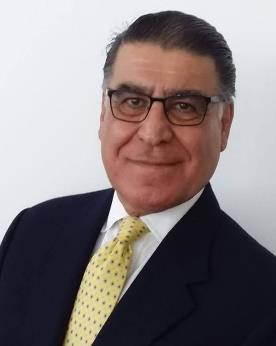
Fereydoun Khoie is a prominent entrepreneur, Chairman of the Liberal Democratic Party of Iran, and a candidate for Prime Minister in the soon-to-be-established Royal government in Iran. He was a staunch opponent of the mullahs’ fraudulent revolution from the very first days, and to this day, he has not neglected the struggle for freedom, democracy, and the rule of law in Iran.